Category: Birth Month Flowers

You’ve heard of birthstones – the gemstone assigned to the month you were born in – but you might be surprised to learn that there’s a flower assigned to every month as well.

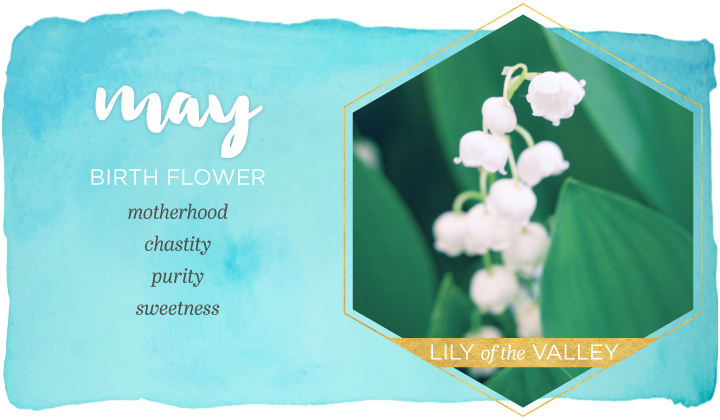
  • MAY’S BIRTH FLOWER: Lily of the Valley

    MAY’S BIRTH FLOWER: Lily of the Valley

    The delicate blossoms of the May birth flower resemble tiny white bells hanging from green stems. Lily of the valley are small, but mighty! They have one of the loveliest scents you can imagine—making it a popular choice for fresh cut bouquets, perfumes and more! 

    With its sweet scent, it comes as no surprise that the most popular meaning of May’s birth flower is sweetness. Lily of the valley also symbolizes hope, purity, virtue, and humility. 

    The lily of the valley has a long history, and many different meanings across cultures. In Greek mythology, Apollo grew lily of the valley in the woods to protect the feet of his muses. In German mythology, lily of the valley is associated with Ostara, the goddess of spring. Lily of the valley is also mentioned more than a dozen times in the Christian Bible.

    The British Rock band, Queen, even wrote a song about them! However, despite the common name, this plant is not actually a lily. Botanically, it’s classified as part of the asparagus family.

    While the lily of the valley is most popular as a garden plant, it is increasing popularity as a cut flower, most often in bridal bouquets. The flower’s traditional symbolism of purity, humility, and virtue adds to its popularity in wedding arrangements. Its beautiful fragrance has inspired many perfumes and beauty products. 

    Lily of the valley may also be referred to as May bells, Our Lady’s tears, and Mary’s tears. Its French name, muguet, sometimes appears in the names of perfumes having the flower’s scent. 

    Happy Birthday to all our May Grow Friends!

    It’s your month. 

    Smell the flowers. 💐

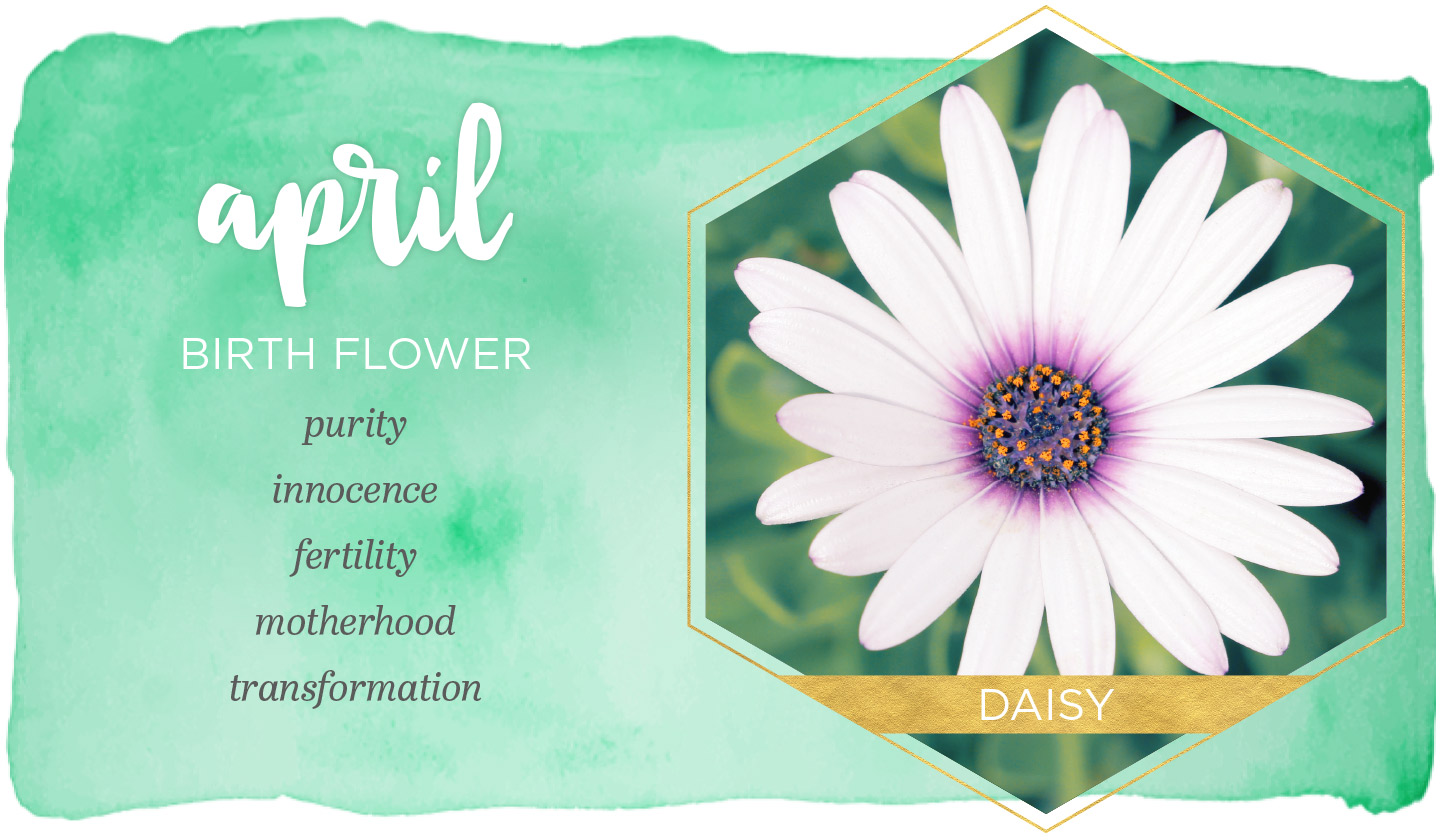
  • APRIL’S BIRTH FLOWER: Daisies

    APRIL’S BIRTH FLOWER: Daisies

    The name daisy came from the Old English phrase, “daes eage”, which means “day’s eye”.  The name refers to the way daisies close their petals in the evening, and open again at dawn, marking the beginning of each new day!

    The daisy symbolizes purity and innocence. Commonly gifted to new mothers, the April birthday flower also represents fertility and motherhood. According to Roman myth, the daisy also symbolizes chastity and transformation.

    Daisies are first known to be cultivated around 2200 B.C. when they were used by Egyptians to treat illnesses. They were later used in England as a cure for eye problems and stomach ulcers.  Daisy leaves can also make a tasty addition to salads (they’re closely related to artichoke and are high in Vitamin C).

    Daisies are found on every continent except Antarctica! 

    Daisies come in a variety of colors with different symbolism for each:

    • White daisies symbolize purity and innocence
    • Pink daisies symbolize love and romance 
    • Yellow daisies symbolize happiness and friendship 

    The largest ever game of “He Loves Me, He Loves Me Not” was played by 331 people in Milan, Italy on 18 April 2009. Participants plucked daisy petals to determine if their secret crush loved them back.

    Happy Birthday (and of course your crush loves you!) to all our April Grow Friends!

    It’s your month. 

    Smell the flowers. 💐

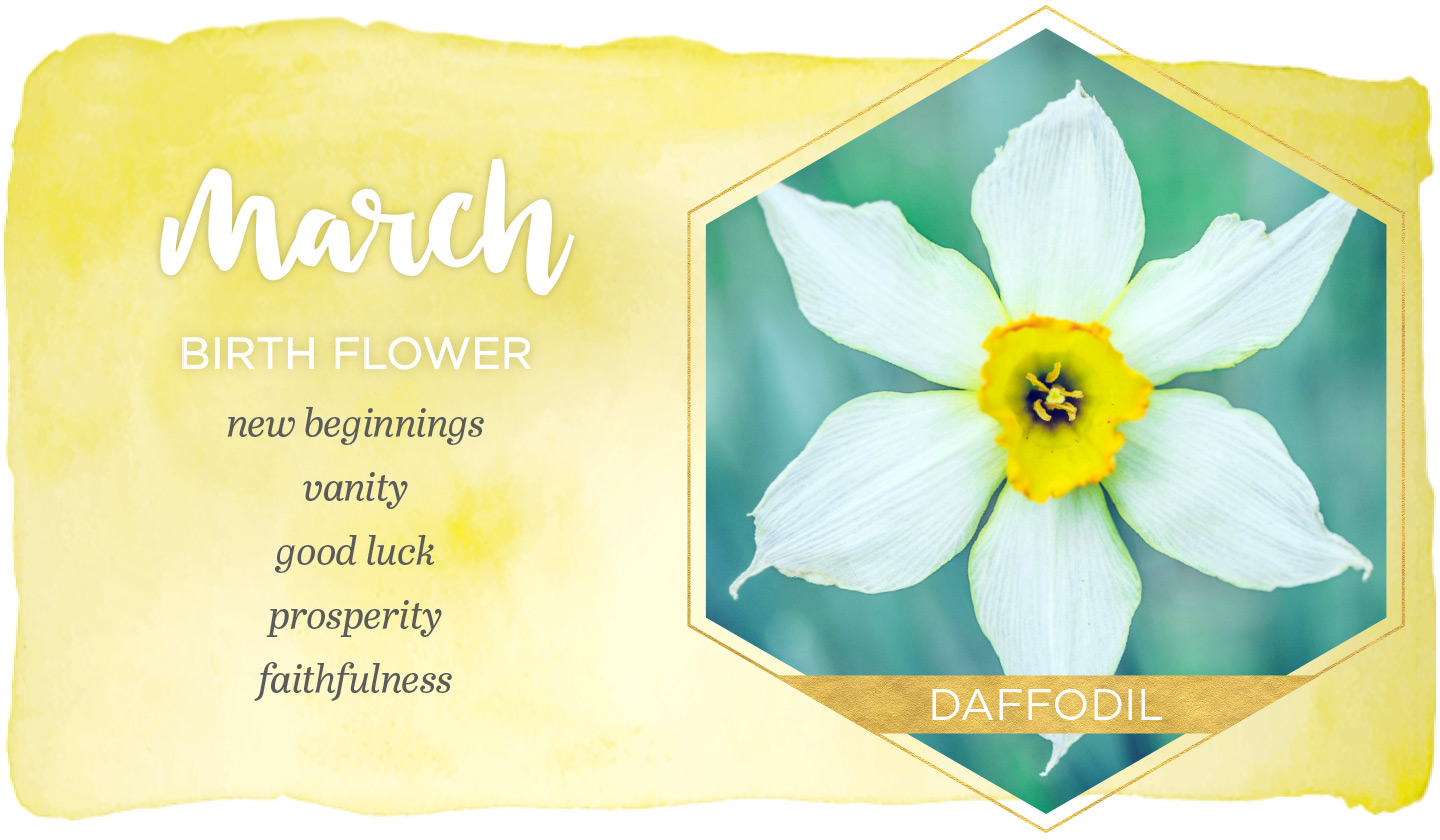
  • March Birth Flowers: Daffodils

    March Birth Flowers: Daffodils

    The name daffodil came from the Old English word, “Affodyle,” which means “that which comes early.” Indeed, daffodils arrive early in spring, to shower the Earth with hope and cheer!

    The daffodil represents beautiful beginnings and good fortune. It is believed that if a daffodil flower blooms exactly on New Year’s Day, it brings good luck for an entire year!  Daffodils are often given as a gift to celebrate a new home (as a housewarming gift), a new job, or a child’s birth.

    The bright-colored flower was also symbolic to the ancient Greeks as it is the flower that sprang up at the site where the self-loving Narcissus killed himself and reawakened to bloom as an Easter flower. Daffodils also correlate to the story of Jesus, whose death and resurrection is commemorated every Easter.

    Daffodils come in a variety of colors with different symbolism for each:

    • Yellow daffodils symbolize new beginnings, good luck, and prosperity
    • Orange daffodils symbolize enthusiasm, vitality, and faithfulness
    • Purple daffodils symbolize self-esteem and vanity. (If you feel low, or if you need to boost your confidence, place a purple daffodil around and start trusting your abilities, qualities, and judgment)

    Daffodils are also the official flowers for 10th Wedding Anniversaries.
    Happy Birthday and Happy 10th Anniversary to all our March Grow Friends!

    It’s your month.

    Smell the flowers. 💐

    www.grow.bm/

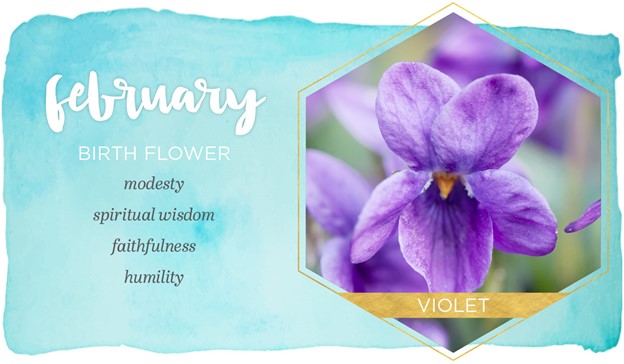
  • February Birth Flowers: Violets

    February Birth Flowers: Violets

    Violets are really hardy little plants, and are named for their blue-purple color. However, they also come in shades of blue, yellow, and cream. What’s more, there are thought to be around 500 species of violets today!

    Violets have deep roots in Greek Mythology who saw them as a symbol of fertility and love.  They used the flowers in love potions and to ward off headaches and dizzy spells. This tradition was so popular that it also became the symbol of Athens.  Nowadays, violets symbolize modesty, spiritual wisdom, humility and faithfulness. 

    Violets produce a scent that’s well-liked, but hard to describe. That’s because the blooms contain ionine, a chemical that temporarily de-sensitizes the sense of smell. Just as you take in the first whiff, your nose briefly dysfunctions, and the scent is gone! Some say it is sweet; others say it’s lovely. 

    Violets are so adaptable and versatile that they are an easy choice to enhance any garden.  Violets are low-maintenance plants that grow easily from root cuttings or seeds. Violets are not the biggest fan of heat and humidity; they tend to do best in shaded areas with rich, organic soil. 

    The violet, was Emperor Napoleon Bonaparte’s favorite flower. Violets are the also official flower to commemorate lost World War 1 soldiers.

    Happy Birthday to all our February Grow Friends!

    It’s your month. Smell the flowers.
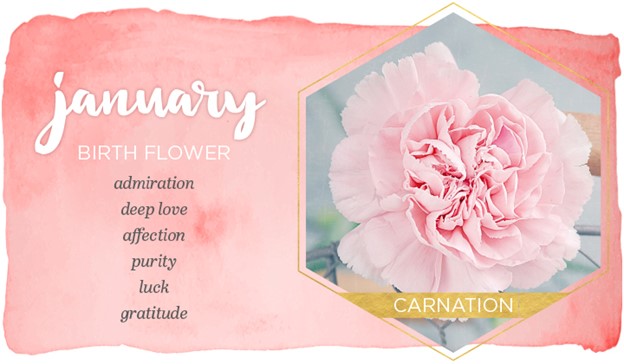
  • January Birth Flowers: Carnations

    January Birth Flowers: Carnations

    Carnations are very old flowers, full of history and symbolism. Generally, carnations are seen as a
    symbol of fascination and women’s love. Originally carnations were shades of pink or peach, but now you can find them in pretty much any color, as well as striped varieties.

    Carnations are one of these flowers whose meaning varies greatly according to color:

    • Pink carnations, represents appreciation
    • Light red, represents admiration
    • Dark red, represents love
    • White, represents good luck

    Think twice about gifting striped, purple or yellow carnations!

    • Striped, represents refusal
    • Purple, represents fickleness
    • Yellow, represents rejection

    Carnations are also the official flowers for 1st Wedding Anniversaries.

    Happy Birthday and Happy 1st Anniversary to all our January Grow Friends!!

    Its your month. Smell the flowers.
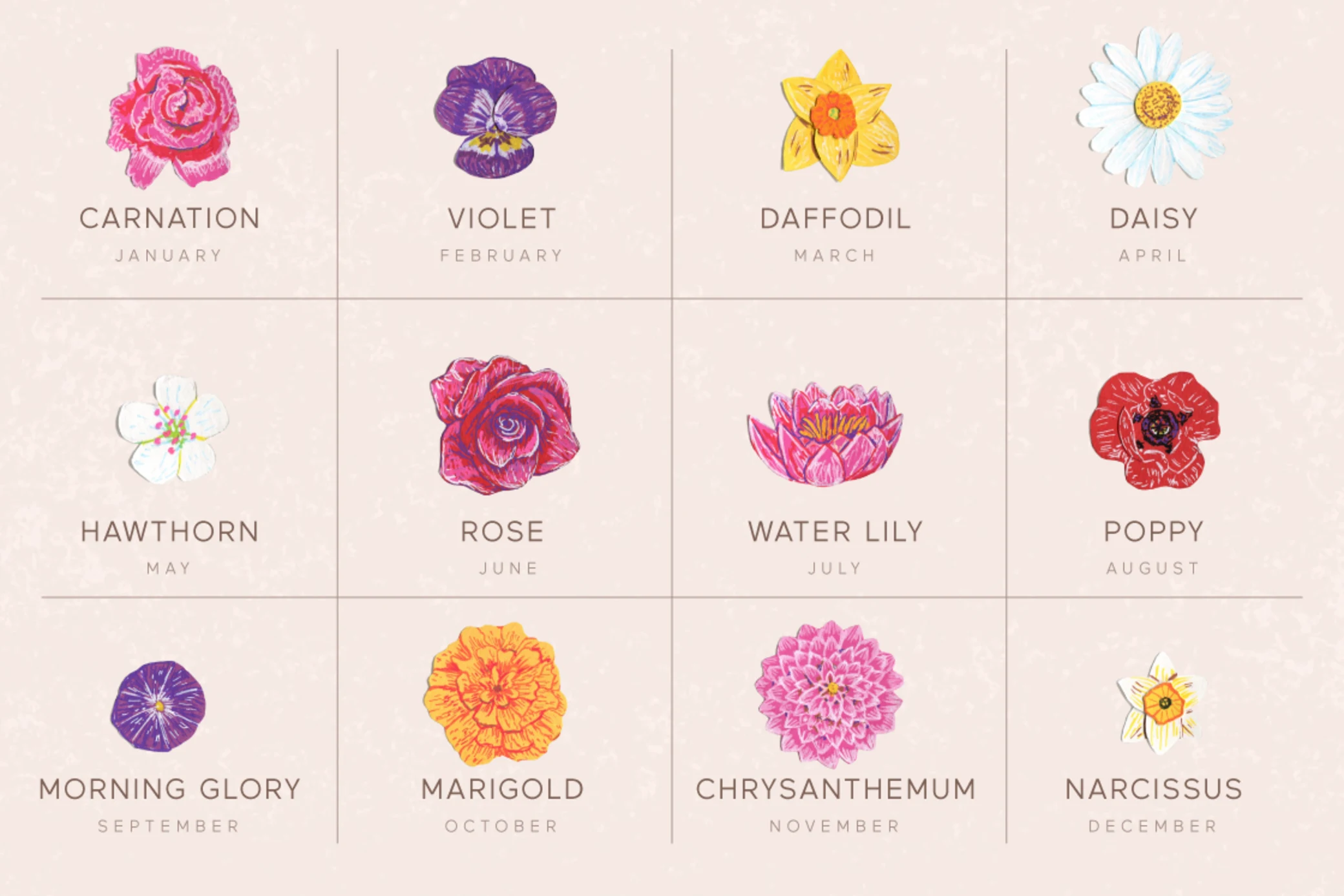
  • Do you know what your birth flowers are?

    Do you know what your birth flowers are?

    You’ve heard of birthstones – the gemstone assigned to the month you were born in – but you might be surprised to learn that there’s a flower assigned to every month as well.

    The concept is thought to have originated in Roman times when birthday celebrations first begun.
    These early celebrations included decorating the altars of Roman gods with flowers and giving flowers as birthday gifts.


    The idea of flowers having symbolic meaning, was first introduced to England in the early eighteenth century, by Lady Mary Wortley Montagu. It took around a century for the floriography (language of flowers) craze to catch on though.


    During the Victorian era, the Language of Flowers became hugely popular. Flowers provided a way of conveying a hidden message to a lover, without breaking the strict rules of etiquette surrounding
    displays of love or affection. Every type of flower had a meaning assigned to it, and this could be used to communicate a message, feeling or mood to the recipient without speaking aloud. Basically, it was an easy way to send a coded message!


    Fast forward to the present day, and we now have a choice of flowers with specific meanings for each month of the year! If you’re ever wondering what birthday flowers to gift, birth flowers can be a great option when selecting your blooms for a truly personal gift!